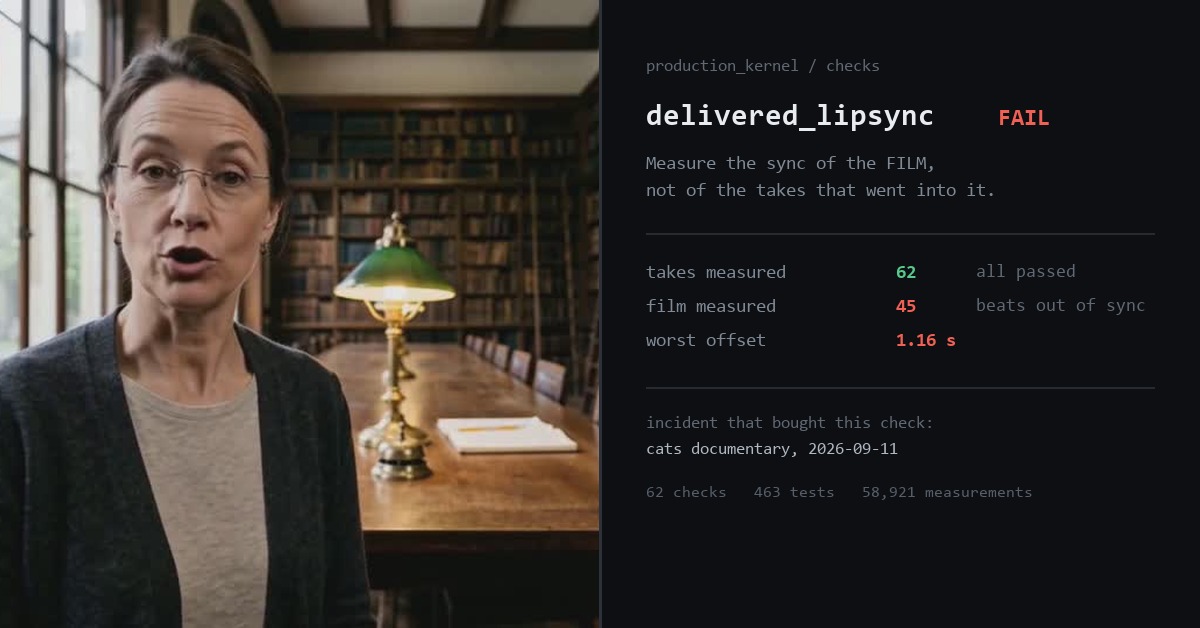
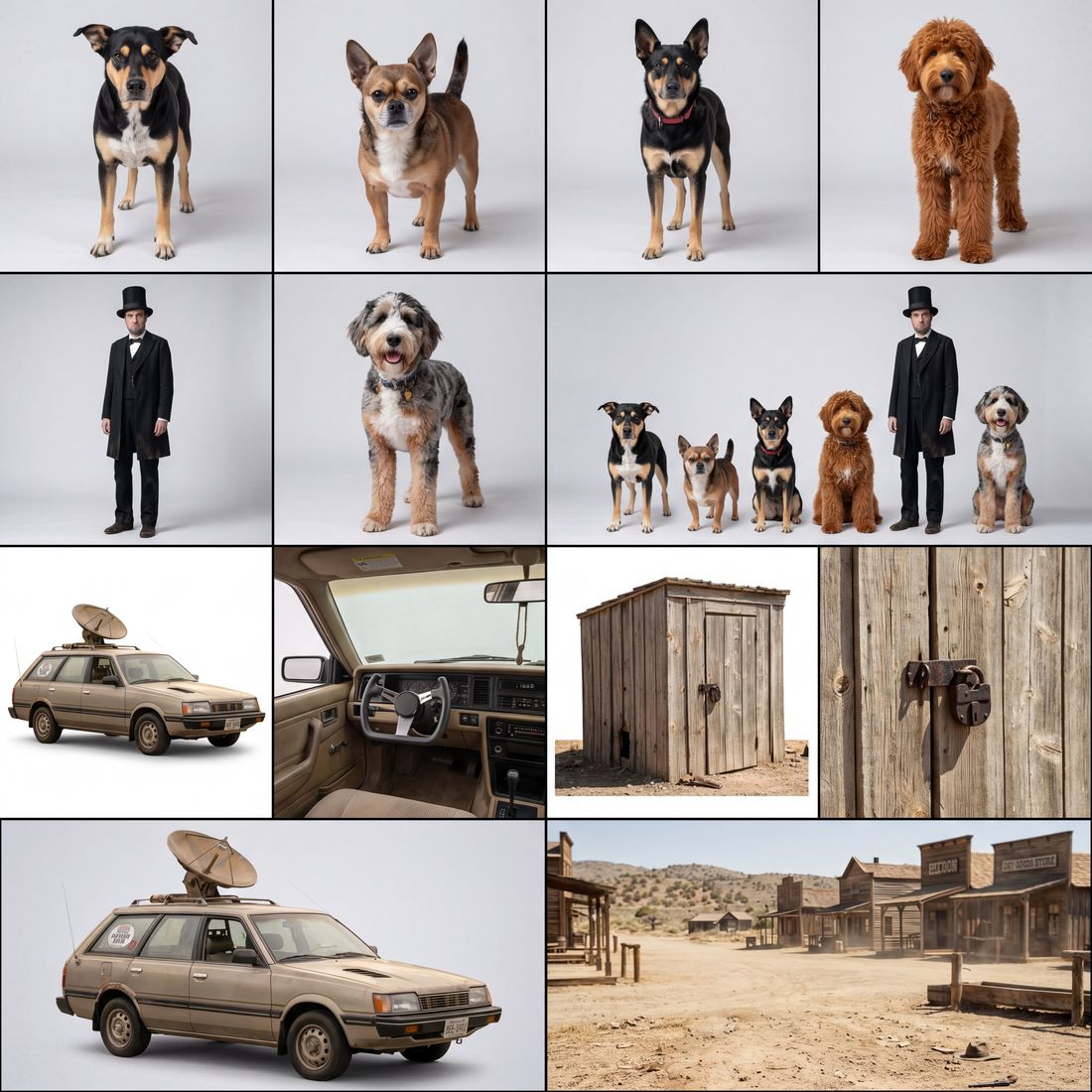
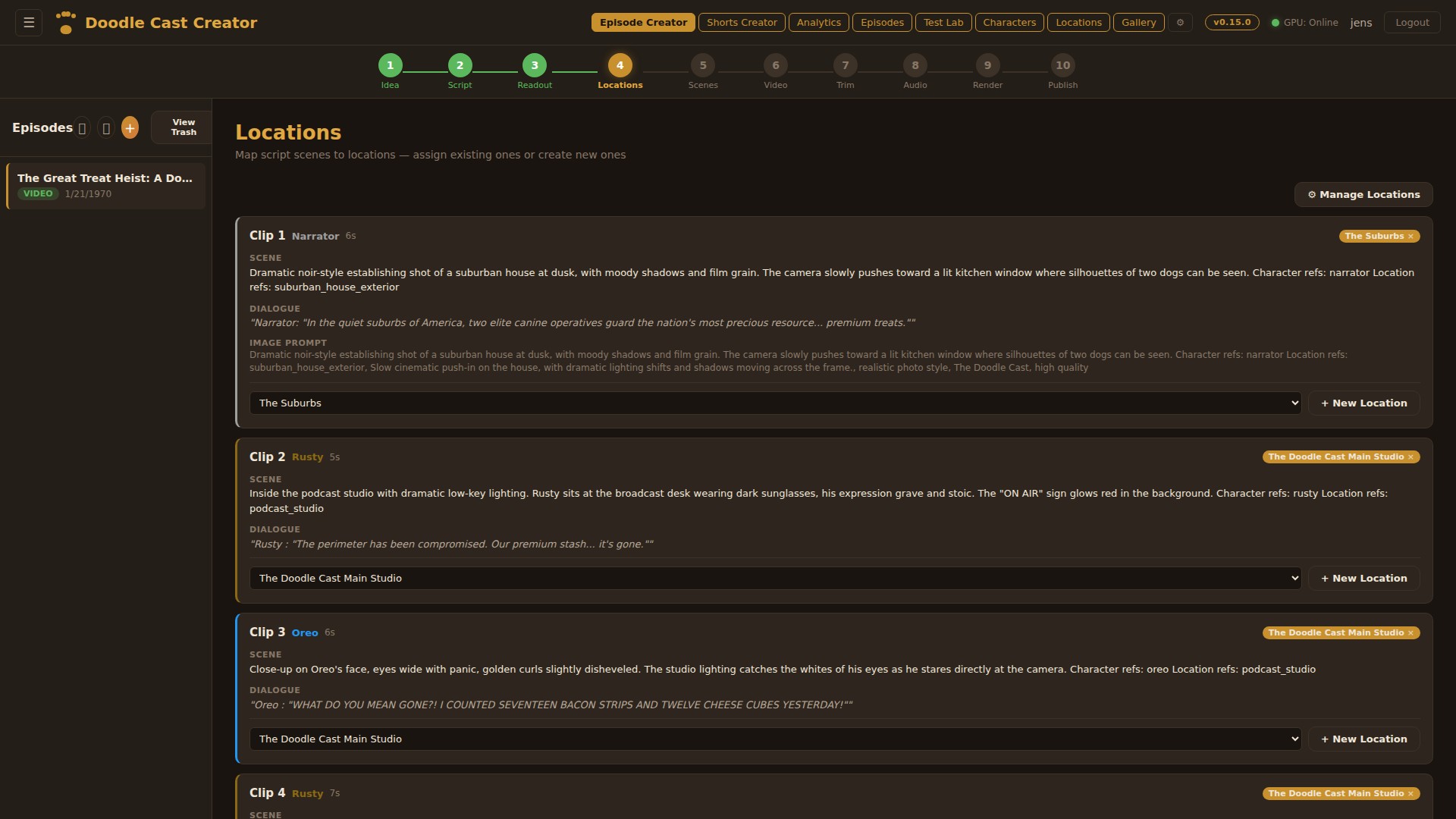
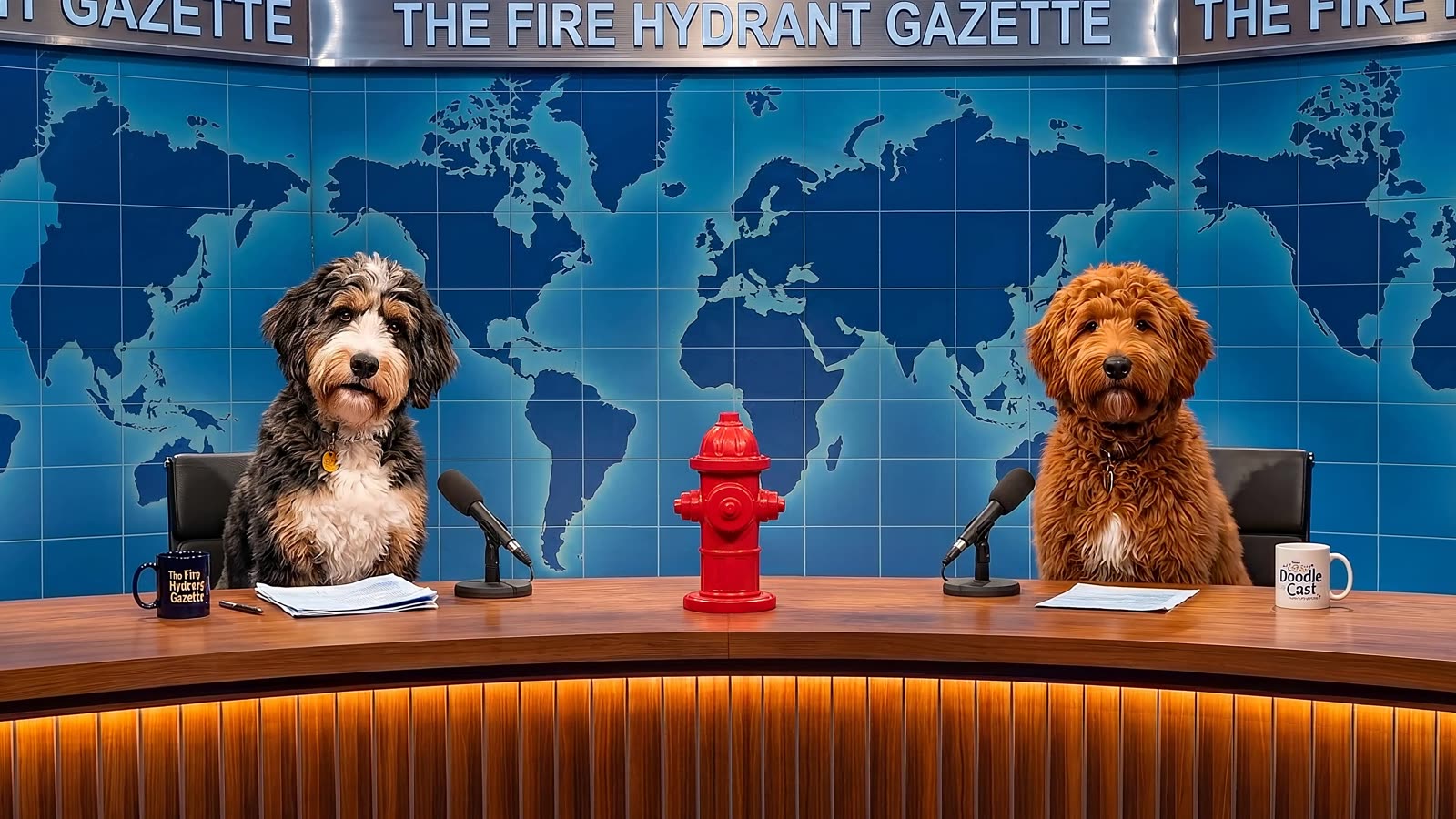
I published a documentary with 45 of its 62 on-camera shots out of sync. The test passed because it was looking at the wrong file. This is how far a film can be automated on two GPUs I own, and the feedback loops that keep it honest.
I trained ten LoRAs across five characters on an image model and a video model, measured the identity gain with CLIP, and compared it against the reference conditioning that Showspring actually ships. The character with the most training photos gained the least.
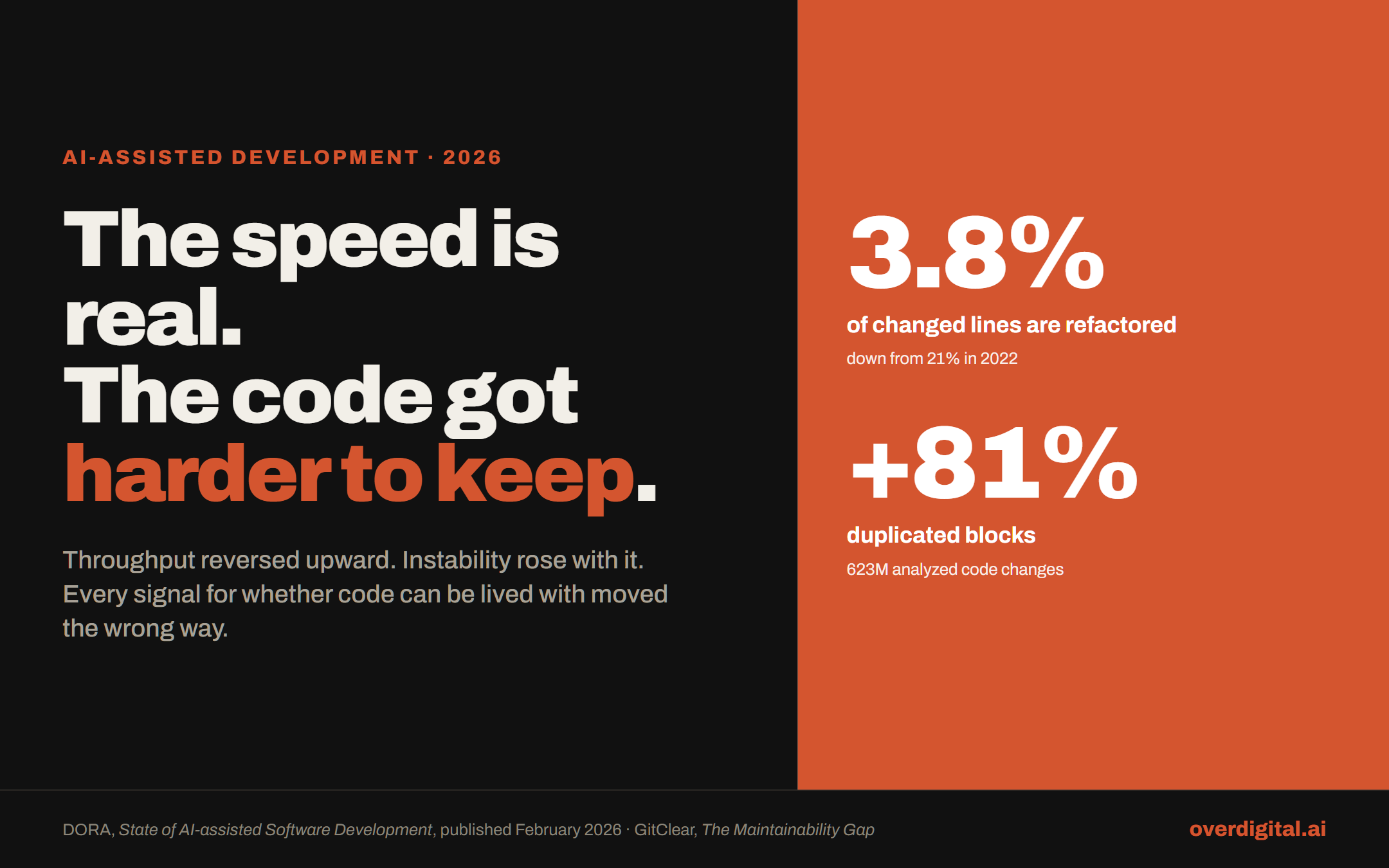
In 2024 AI adoption tracked with lower throughput. By 2026 that reversed: throughput rose, instability rose with it, and every signal for whether code can be maintained went the wrong way.
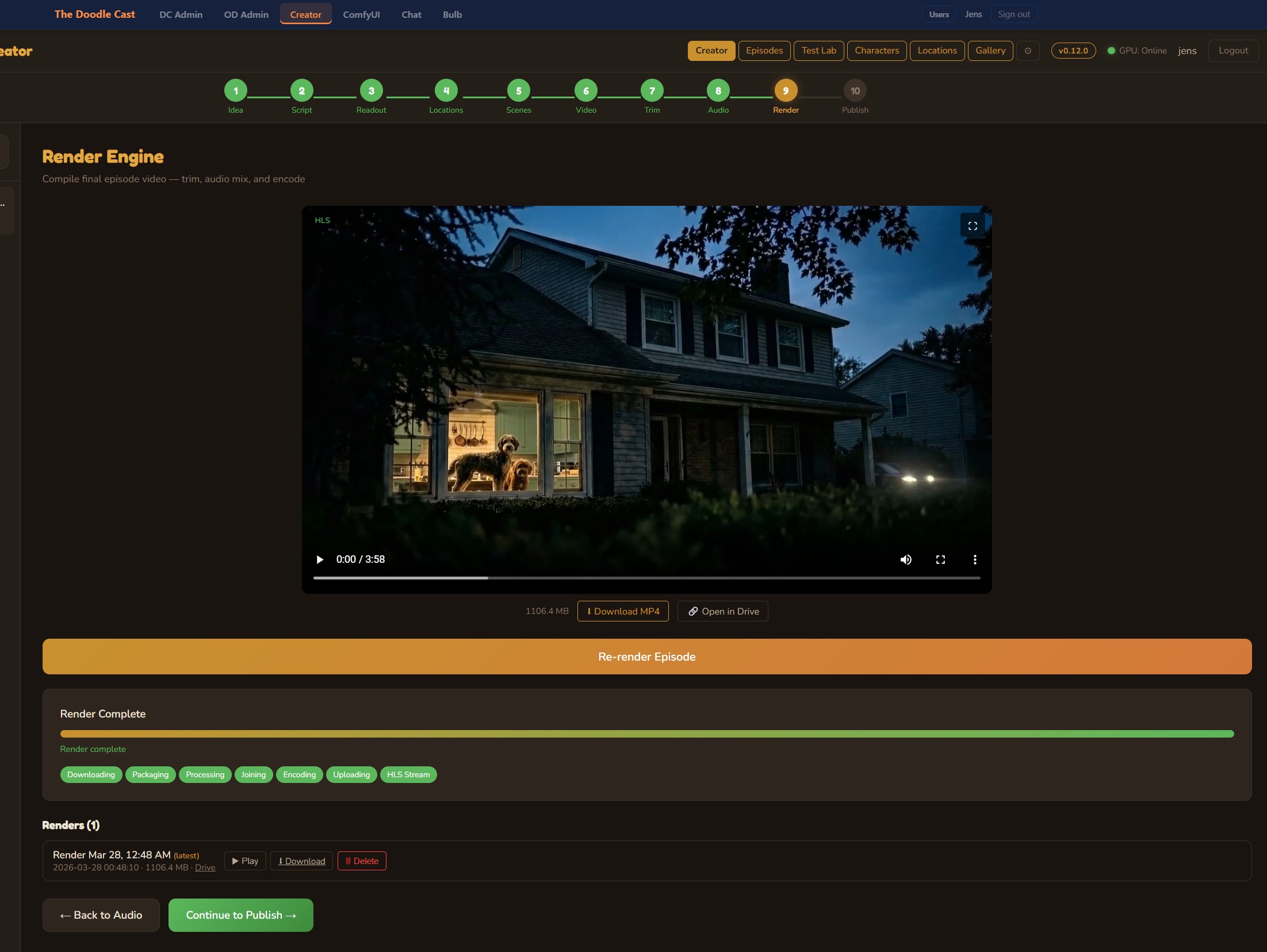
Two upgrades from the last couple of weeks: why Showspring now runs on a fleet of AI agents instead of a single coding assistant, and how moving video generation to reference-to-video with Seedance took the Doodle Cast from "close enough" to genuinely on-model. Plus a first, very wet look at the episode in production.
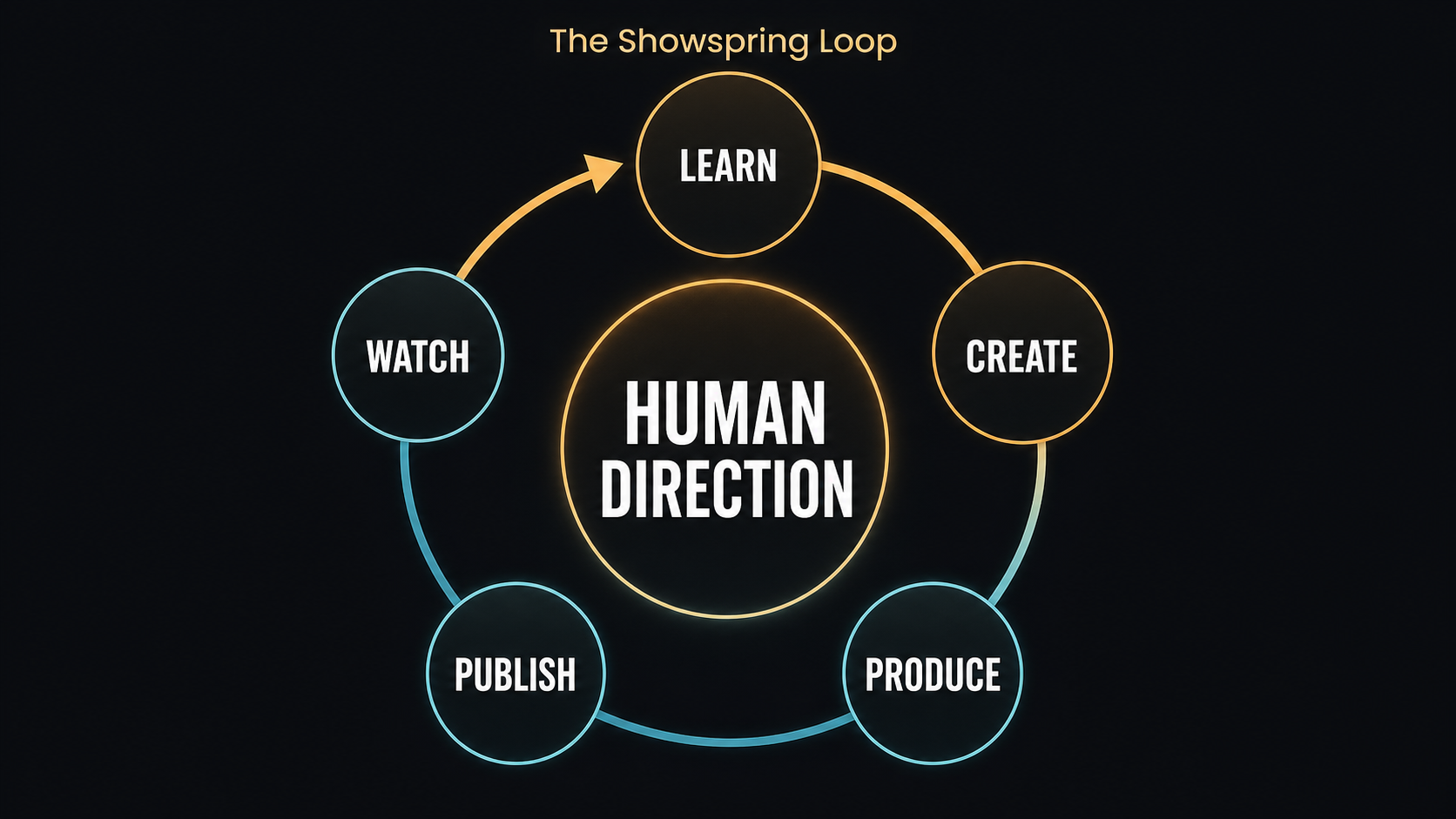
I picked generative video because its failures are impossible to hide. Here is what building Showspring taught me about agents, Style DNA, feedback loops, and keeping the human in the director’s chair.
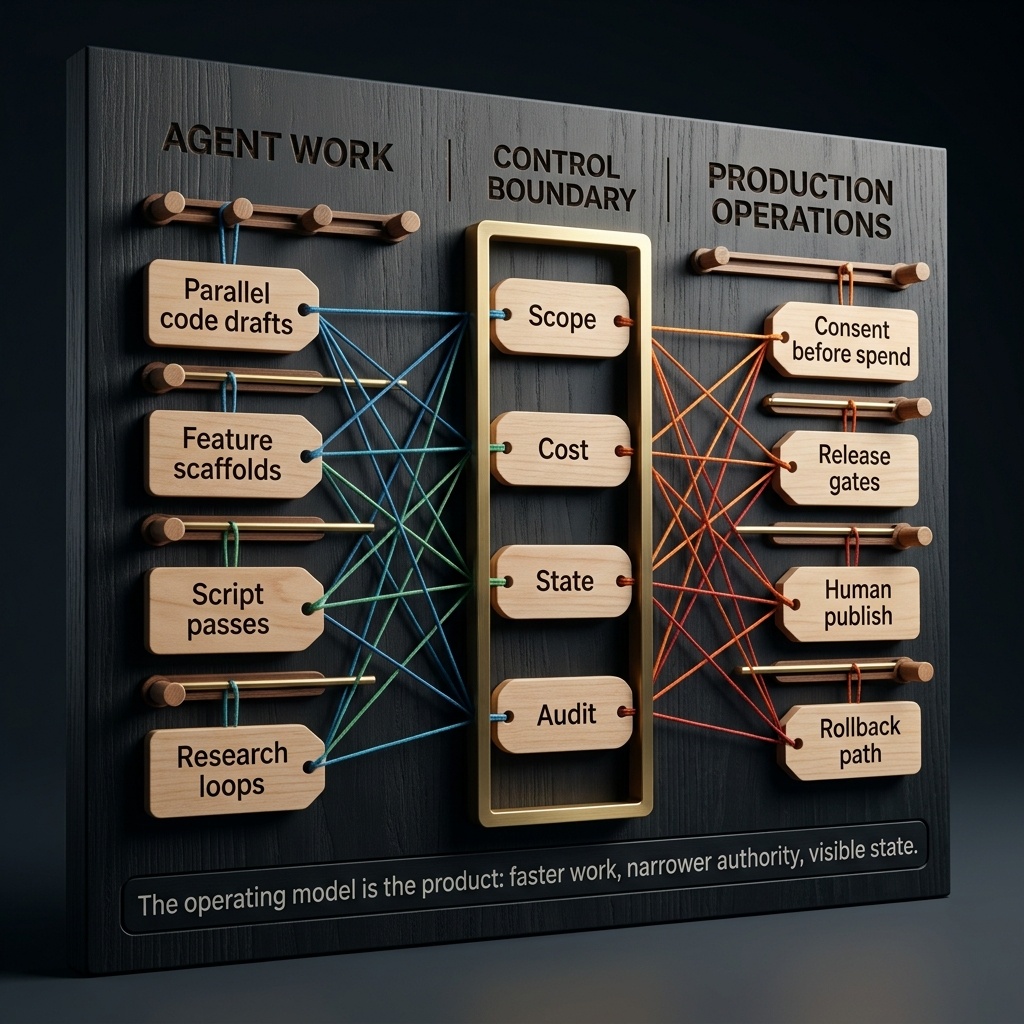
Showspring gave me a rare sandbox: unleash parallel AI coding sessions and product agents on a real software project, then learn which controls make that velocity deployable in real operations.
I ran a bake-off to find the best image model for my show, and the surprise was how much two free prompt fixes mattered. On this episode, a cheap model with the fixes held its own against a model that costs several times more. Run the eval before you buy the upgrade.
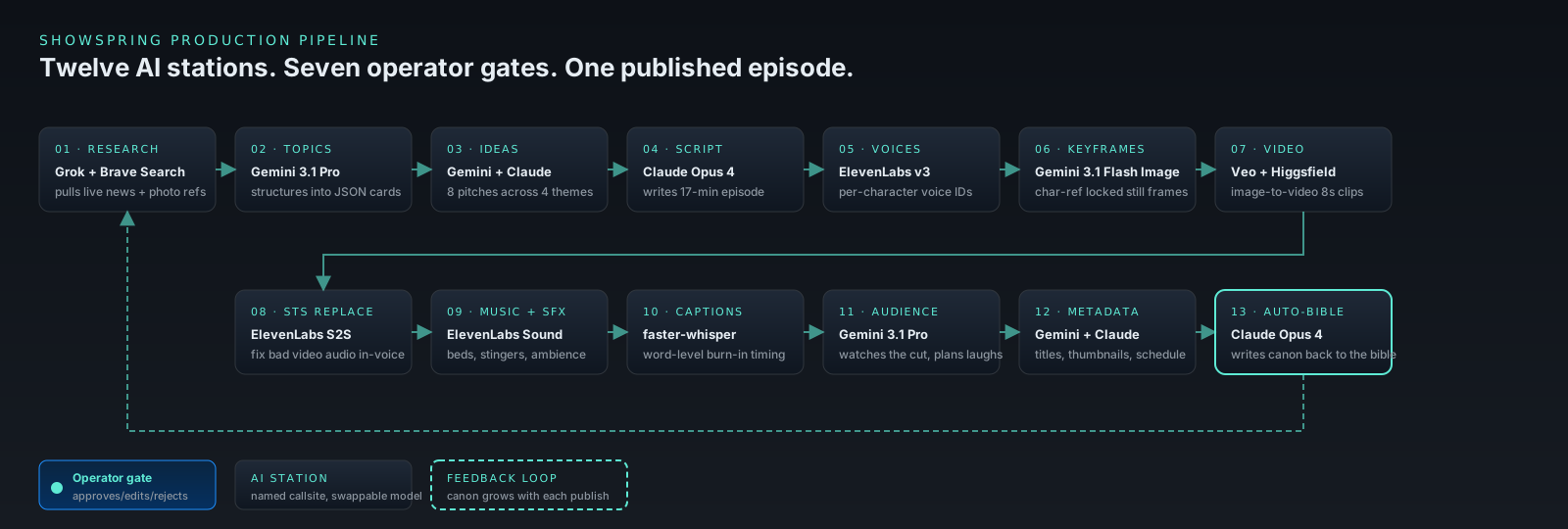
A walk through every AI integration in Showspring — the creative job each one does, why it is there, and what the equivalent crew would look like without it. The point is not AI-generated content. The point is AI as the production crew.
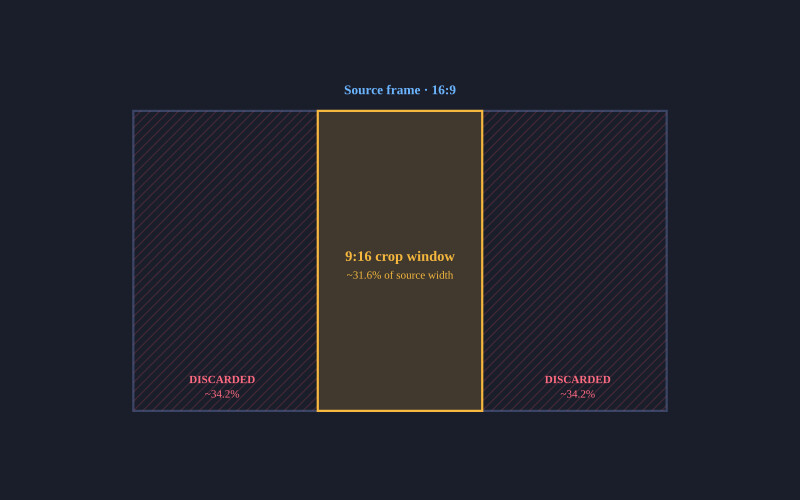
PodSplit turns any landscape YouTube video into a speaker-aware vertical clip in minutes. Audio-visual active speaker detection, dynamic per-frame crop tracking, burned-in captions, all unattended.
Showspring renders broadcast-quality MP4s end-to-end on a server. So why ship them into DaVinci Resolve at all? Because some shows need a human’s last word — and getting a server timeline into the most opinionated NLE on the market took a layered integration design, an unsolicited Defender false-positive, and a tour through Resolve’s most-undocumented APIs.
What began as a 7-step automated video pipeline has grown into a formidable 24-step AI production studio. Showspring now essentially replaces an entire team of specialists, reducing production time from weeks to a single pass.
News-desk comedy needs an audience. Sitcom laugh tracks were wrong. Dense festival crowds were wrong. Weekend Update was right — and getting there took nine reaction types, a multi-take stem library, a density dial, a multi-model LLM planner, and one weirdly specific trick to make the goodbye bleed into the outro.
↗
This site uses Google Analytics to understand traffic patterns.
No advertising or tracking without your consent.
Privacy Policy